

If your office carpet smells even after cleaning, you are not alone. Many businesses deep clean their floors and still notice musty, sour, or wet dog odors a day or two later. The good news is that carpet odor has specific causes, and there are proven ways to fix it fast. In this guide, we break down the top five reasons office carpet smells after cleaning, how to spot the underlying problem, and the best solutions to keep your space fresh. If you are in southeast Wisconsin or northeast Illinois, Marathon Carpet Cleaning is ready to help with expert service and a 100 percent satisfaction guarantee.
Why Does an Office Carpet Smell After Cleaning?
Carpet odor usually comes from what you cannot see. Water that lingers deep in the carpet backing, sticky soap residue, hidden spills under desks, and humidity trapped indoors can all lead to stubborn smells. Even a good cleaning can bring old contamination up to the surface, which is why odors sometimes get worse before they get better. The key is using the right process, the right products, and proper drying.
The Top 5 Reasons Your Office Carpet Smells
1. Too Much Moisture and Slow Drying
Overwetting is the most common reason an office carpet smells after cleaning. If the carpet backing or pad stays damp for too long, bacteria and mildew grow quickly. High indoor humidity, poor ventilation, and low air movement make drying even harder, especially in interior offices with no windows or in basements.
- Signs you will notice: A musty or sour smell within 12 to 48 hours after cleaning, darker areas that feel cool or damp to the touch, and employees mentioning allergy flare-ups.
- Fast fix: Increase airflow with fans, open interior doors, and run HVAC continuously. If possible, set dehumidifiers to bring relative humidity below 50 percent. Place air movers to push air across the carpet, not straight down. For heavily wet areas, professional sub-surface extraction pulls moisture from the pad.
- Prevention: Choose low-moisture methods when appropriate, pre-vacuum thoroughly, and use controlled hot water extraction with strong vacuum recovery. Plan cleaning for late afternoon so carpets can dry overnight with HVAC running.
2. Wicking From the Pad and Subfloor
Wicking happens when old spills or contaminants deep in the pad rise to the surface as the carpet dries. Even if the top fibers look clean, residues beneath can move upward and leave a ring, stain, or odor. Coffee, soda, and pet accidents are common culprits in office settings. If your carpet looked great right after cleaning but smells the next day, wicking may be to blame.
- Signs you will notice: Stains reappear after drying, odor is strongest in a few specific spots, or the smell seems stronger after walking on the area.
- Fast fix: Target the affected sections with sub-surface extraction and an enzyme treatment that breaks down organics. Do not just mask with fragrance. Use weighted extraction tools to flush contamination from the backing and pad.
- Prevention: Address spills quickly, use chair mats in break rooms and near desks with frequent drinks, and schedule periodic targeted flushes for known trouble areas. Ask your cleaner to inspect for cushion saturation and to use specialized tools when needed.
3. Bacteria From Food, Beverages, and Pet Accidents
Offices collect a lot of organic material. Coffee with cream, sugary drinks, salad dressings, and lunch crumbs work their way into the fibers. In pet-friendly offices or buildings with service animals, urine and dander add to the problem. When moisture from cleaning hits these residues, bacteria activate and release odors.
- Signs you will notice: Sour milk or ammonia smells, sticky fibers that attract dirt, and odors that come back quickly after standard cleaning.
- Fast fix: Use true enzyme or bio-enzymatic treatments that digest organic matter, followed by thorough hot water extraction. For urine, use a specialized urine neutralizer that breaks down the salts, then provide deep flush and rapid drying.
- Prevention: Set a food and drink policy for certain carpeted areas, place walk-off mats near break rooms, and schedule interim cleanings in kitchens and conference rooms. Prompt spot treatment is important for any spill with proteins, sugars, or oils.
4. Soap and Powder Residue Left Behind
Some cleaners use too much detergent or leave powder deodorizers in the fibers. Residue attracts soil and holds moisture, which leads to a funky smell soon after cleaning. It can also make your carpet feel crunchy. When residue builds up over time, it traps old odors that reactivate when the carpet gets damp.
- Signs you will notice: Sticky or crunchy carpet texture, rapid resoiling on traffic lanes, and artificial fragrance that fades to a stale smell.
- Fast fix: Rinse the carpet thoroughly with hot water extraction using a mild, properly diluted solution and an acidic rinse to neutralize residue. Avoid heavy perfumes. Follow up with strong vacuum passes for maximum recovery.
- Prevention: Hire certified professionals who use measured dilution and industry-approved rinses. Ask about residue-free cleaning. Avoid over-the-counter powders that leave particles in the pile.
5. Nearby or Structural Odor Sources Blamed on the Carpet
Sometimes the carpet is not the main source. Damp concrete, dirty HVAC, leaky baseboards, or musty furniture can push odor into the room and make it seem like the carpet is the problem. Storage rooms, restrooms, and kitchens can also share airflow with open office areas.
- Signs you will notice: Odors are stronger near walls, HVAC returns, or shared doors. Smell remains even after the carpet dries. Ceiling tiles look stained or there are water marks on baseboards.
- Fast fix: Inspect for water intrusion, check HVAC filters and ducts, and clean nearby soft surfaces like upholstered partitions. Use a moisture meter at the perimeter and treat affected materials with an antimicrobial product if safe and appropriate.
- Prevention: Keep indoor humidity below 50 percent, maintain HVAC regularly, seal baseboards, and address leaks quickly. Build a routine cleaning plan for chairs, partitions, and mats.
Hidden Odor Sources You Might Be Missing
Even when your team vacuums daily, odors can hide in places that are easy to overlook. If your office carpet smells, check these spots before assuming the cleaning did not work.
- Under plastic chair mats and protective runners. Trapped moisture and drink spills can sour the backing.
- Edges along baseboards and under cubicle partitions. Dust and moisture collect where vacuums do not reach.
- Under desks and around trash cans. Food crumbs and drips often miss the bin.
- Entry mats. If mats are not cleaned or replaced, they hold onto moisture and transfer odor to nearby carpet.
- Upholstered partitions and chairs. Fabric panels and seating absorb odors and re-release them.
- Server rooms and copier areas. Ozone and toner odors can migrate and stick to fibers.
- Restroom and break room thresholds. Splash zones and tracked moisture cause recurring issues.
Proven Fixes to Eliminate Office Carpet Odors Fast
When you need results quickly, follow a clear, step-by-step plan. Marathon Carpet Cleaning uses processes that address both the source and the symptoms.
- Inspect and test. Identify moisture with a meter, use UV light to locate pet or protein contamination, and map out high-risk zones like break rooms and entries.
- Increase airflow. Run HVAC in continuous fan mode, place air movers to create cross-ventilation, and set dehumidifiers to manage humidity.
- Target source removal. For organics like milk, coffee, or urine, apply enzyme or oxidizing treatments that neutralize the cause, not just the smell.
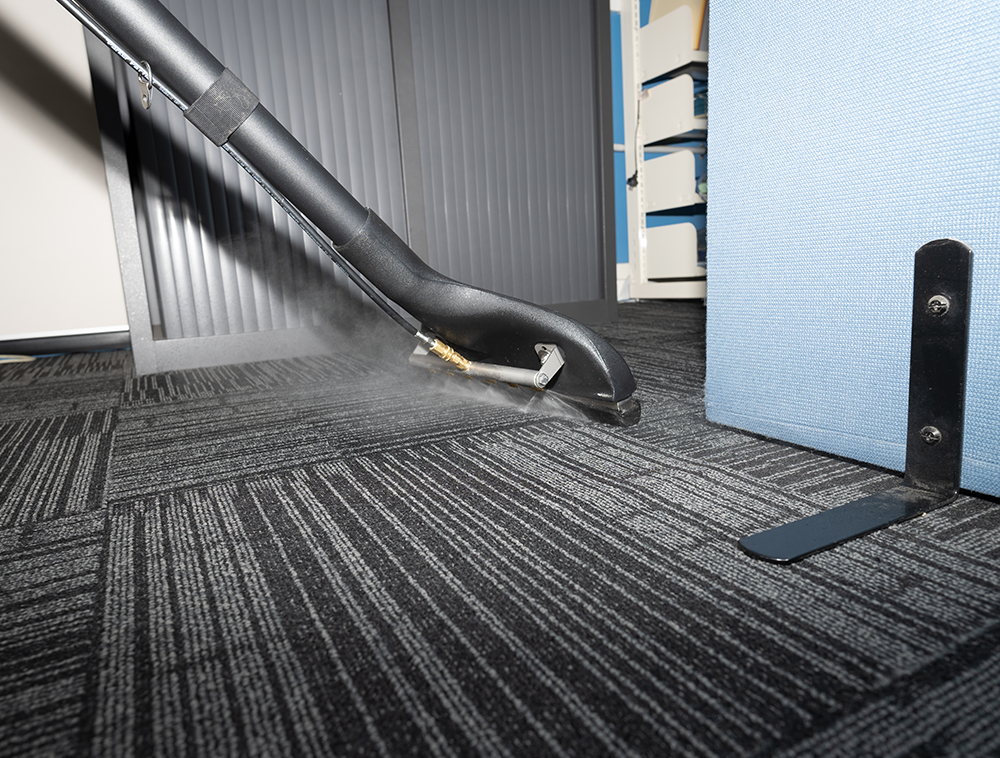
- Perform controlled hot water extraction. Use balanced chemistry and strong vacuum to flush residues. Rinse properly so the carpet dries soft and clean.
- Use sub-surface extraction where needed. For deep spills and wicking, use weighted tools to remove moisture from the pad and backing.
- Apply antimicrobial where appropriate. In areas with microbial growth concerns, use an approved product according to safety guidelines.
- Speed dry. Keep air movers in place until the carpet feels dry. Confirm with a moisture meter in problem areas.
- Follow up. Recheck odor after 24 hours. If a spot returns, perform a focused retreatment rather than re-cleaning the entire area.
Why Choose Marathon Carpet Cleaning
Marathon Carpet Cleaning is a certified cleaning company based in Racine, Wisconsin, with an additional location in Union Grove. We serve homes and businesses across southeast Wisconsin and northeast Illinois. Our team stands behind every job with a 100 percent satisfaction guarantee. When an office carpet smells after cleaning, we do not guess. We inspect, identify the true source, and use the right process to fix it.
- Carpet Cleaning. Deep cleaning for commercial and residential carpets and area rugs. We remove stains, odors, and allergens with industry-leading equipment and balanced chemistry.
- Hard Surface Cleaning. Tile, grout, vinyl, laminate, and hardwood cleaning that lifts embedded soils and brightens finishes.
- Upholstery Cleaning. Couches, chairs, partitions, and mattresses restored with safe, effective methods that remove dirt and odors.
- Commercial Cleaning Services. Tailored maintenance plans for offices and apartment buildings covering carpets, floors, and upholstery.
Service areas include Racine, Union Grove, Burlington, Waterford, Sturtevant, Mount Pleasant, Caledonia, Kenosha, and surrounding southeast Wisconsin communities. We also serve northeast Illinois, including Antioch, Gurnee, Waukegan, and nearby cities. If your office carpet smells, our local teams can provide on-site consultations, moisture readings, and a fast action plan.
Maintenance Tips to Keep Office Carpets Fresh
Consistent maintenance keeps odors away and extends carpet life. Here is a simple plan you can start right now.
- Daily: Vacuum high-traffic areas and entries with a commercial vacuum. Empty trash and wipe down spill-prone zones.
- Weekly: Edge vacuum along baseboards and under desks. Clean and rotate entry mats. Inspect for new stains.
- Monthly: Schedule interim encapsulation cleaning for heavy traffic lanes. This low-moisture method helps control soil and odor between deep cleanings.
- Quarterly or Biannually: Book a deep hot water extraction service for the full office. Adjust frequency based on foot traffic and use.
- As Needed: Treat spills within minutes, especially coffee, dairy, or sugary drinks. Use blotting and the right spotter. Avoid scrubbing that drives the spill deeper.
- HVAC: Replace filters on schedule and keep humidity in the comfort range to support faster carpet drying.
When to Call a Professional
Some problems are bigger than a quick spot clean. If your office carpet smells even after cleaning, call a professional when you notice any of the following:
- Moisture that returns within a day or two after drying.
- Odors concentrated in a few areas that keep coming back.
- Visible wicking or reappearing stains.
- Employees reporting allergies, headaches, or irritation tied to a specific room.
- Signs of a leak, damp baseboards, or stained ceiling tiles.
Marathon Carpet Cleaning can evaluate the space, test for moisture, and create a treatment plan that tackles the cause. If a section of pad or subfloor is beyond cleaning, we will let you know and coordinate next steps with your facilities team or contractor.
Do You Need to Replace the Carpet?
Replacement is not always necessary, but there are times it is the best choice. Consider replacement if the pad is saturated and contaminated, the backing is delaminating, or repeated treatments have not resolved deep odor. Old carpet that has lost fiber integrity can also hold onto odors. Marathon Carpet Cleaning can help you decide if targeted repair, pad replacement, or full replacement is the right move and can provide documentation for your records.
Quick FAQ About Office Carpet Odors
How long should carpet take to dry after cleaning?
Most commercial carpet should dry within 4 to 8 hours under normal conditions. High humidity or poor airflow can extend that time. If it takes longer than 24 hours, odor risk goes up.
Can strong deodorizer fix a smelly carpet?
Fragrance can mask odor for a short time, but it will not solve the cause. True odor control requires removing contamination and drying the backing and pad. Enzymes and proper rinsing work better than perfumes.
Is low-moisture cleaning better for offices?
It depends on the soil load and fiber type. Low-moisture methods are great for maintenance and faster drying. Periodic hot water extraction is still important for deep rinse and residue removal. A good plan uses both.
Ready to Breathe Easier? We Can Help
If your office carpet smells even after cleaning, do not wait for it to go away on its own. Odors often mean moisture, bacteria, or residue needs attention. Marathon Carpet Cleaning brings certified pros, top equipment, and proven methods to offices throughout Racine, Union Grove, and beyond. We offer on-site consultations, clear pricing, and a 100 percent satisfaction guarantee. Call Marathon Carpet Cleaning to schedule your inspection and get your office smelling fresh again.